
Willex
An eye-area ingredient from white willow bark, studied in a double-blind, placebo-controlled split-face test on the appearance of dark circles.
- Ingredient form
- Purified, solubilized 70% ethanol extract (SAE) of white willow (Salix alba) bark
- Lab findings
- Increased high-molecular-weight hyaluronic acid in fibroblasts; melanin, antioxidant, NO and MMP-1 tests (below)
- Key evidence
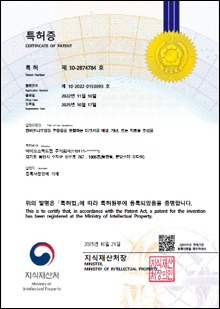
- Jeon S, et al. Int J Cosmet Sci 2023;45(5):636-46 / KR 10-2874784 (2025) / KR 10-2962438 (2026)
- Human use test
- 2% vs placebo, 29 women, 8 weeks, double-blind split-face
- Suitability
- Natural, vegan and organic formulas; phototoxicity, eye irritation and primary skin irritation tests completed
Four types of dark circles
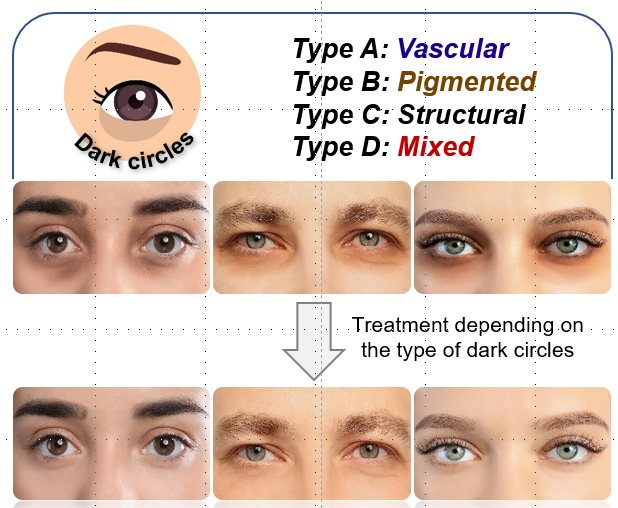
Dark circles make the face look tired and dull. Contributing factors include lack of sleep, fatigue, hormonal changes, stress, smoking and diet, as well as pigmentation, shadows from sagging skin, dryness and vessels visible through thin skin.
To effectively manage dark circles, it is essential to first identify the specific type you have. This can be determined by gently pinching the skin under the eyes or by examining the area using a Wood’s lamp. Generally, dark circles are categorized into the following four types.
- Vascular: bluish, pinkish or purplish, where under-eye skin is translucent.
- Pigmented: brown, where pigment shows through very thin skin.
- Structural: shadows from deep-set eyes or loss of firmness.
- Mixed: a combination of the above.
White willow and salicin
White willow is a willow species native to Europe and Western and Central Asia. The undersides of its leaves are covered with fine white hairs, making the foliage look whiter than that of other willows. It grows mainly in moist habitats such as lakeshores and riverbanks. Willow has long been used as a medicinal plant for fever and pain relief, and its bark contains salicin along with flavonoids such as rutin and apigenin, and polyphenols such as procyanidins and epicatechin.
The name salicin derives from Salix, the Latin genus name for willow. Salicylic acid obtained from salicin has analgesic effects but causes significant gastric irritation; in 1897, Felix Hoffmann of Bayer in Germany synthesized acetylsalicylic acid by acetylating salicylic acid, and it was launched in 1899 under the name “Aspirin.” As a result, willow is often mistakenly thought of as the raw material for aspirin, but willow actually contains virtually no salicylic acid or aspirin, and only small amounts of salicin. The beneficial soothing and antioxidant effects of willow extract are thought to result from the combined action of salicin, flavonoids, and polyphenols.
Manufacturing of Willex
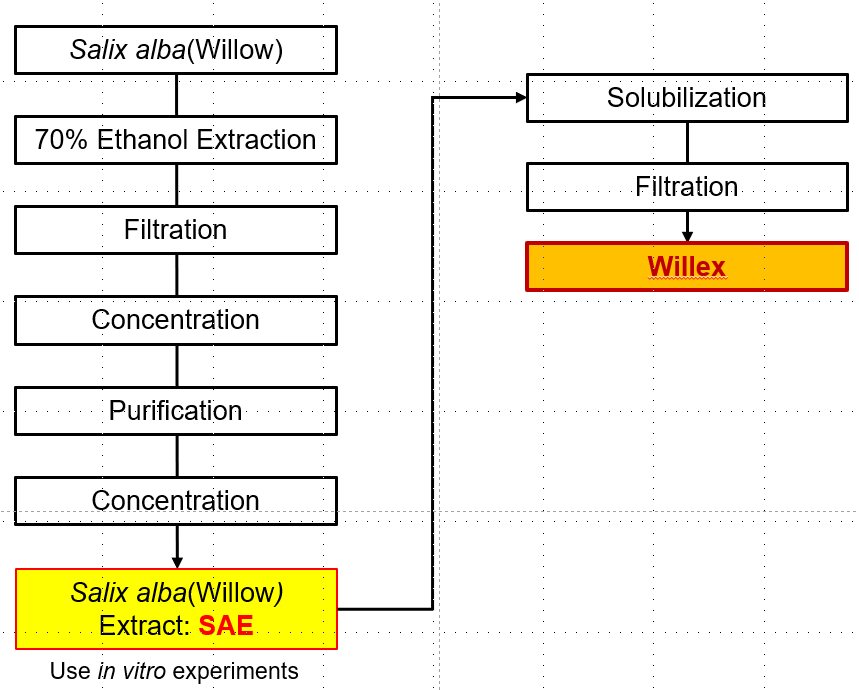
Willex is manufactured by extracting white willow bark with 70% ethanol, then filtering, concentrating and purifying it to obtain the extract SAE, which is solubilized, filtered and concentrated again to give the cosmetic ingredient (Fig. 2). SAE was used in the cell-based experiments.
- Hyaluronic acid: Hyaluronic acid is one of the most important moisturizing factors in the skin. Its moisturizing capacity can be indirectly assessed by measuring the activity of the enzymes involved in the production of this molecule.
- Melanin: Melanin is the primary pigment that determines skin color. By measuring the melanin-producing capacity of the cells responsible for its synthesis, one can evaluate the potential for improving skin tone.
- Antioxidant: Oxidation is a key biochemical process associated with aging. By measuring antioxidant capacity, it is possible to indirectly estimate the potential for anti-aging effects.
- Soothing: Soothing effects are a crucial factor in maintaining overall skin health.
- MMP-1: It is also possible to measure the ability to inhibit collagen-degrading enzymes—a primary driver behind the development of wrinkles associated with aging.
Result I: Hyaluronic Acid Synthesis and Endothelial Barrier Markers
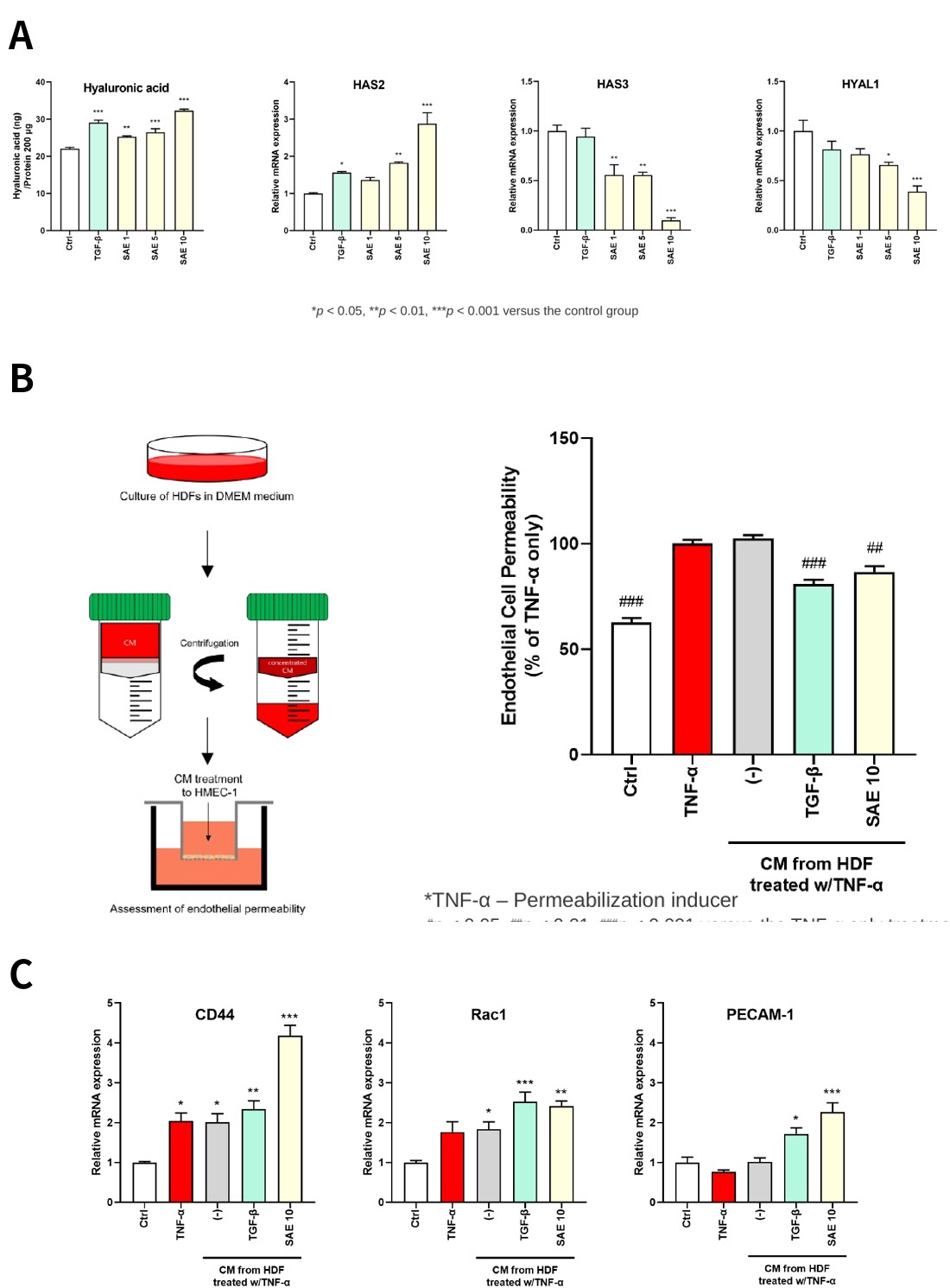
Treatment of human dermal fibroblasts (HDF) with SAE increased hyaluronic acid production. Expression of hyaluronic acid synthase 2 (HAS2), which produces high-molecular-weight hyaluronic acid, increased, while expression of HAS3, which produces low-molecular-weight hyaluronic acid, and HYAL1, which degrades hyaluronic acid, decreased. In other words, SAE promotes the production of high-molecular-weight hyaluronic acid in fibroblasts.
When the conditioned medium from these SAE-treated fibroblasts (SAE-CM) was applied to vascular endothelial cells (HMEC-1), the vascular permeability elevated by the pro-inflammatory mediator TNF-α was reduced. At the same time, expression of the hyaluronic acid receptor CD44 and of Rac1, PECAM-1, and VE-cadherin, which are involved in the vascular endothelial barrier, increased. In contrast, claudin-5 and ZO-1 were unchanged, indicating that, in this cell model, SAE-CM was primarily associated with strengthened adherens junctions.
Result II: Skin Tone, Antioxidant, Soothing, and Anti-Aging Markers
In vitro experiments assessing various parameters—including antioxidant activity, soothing effects, skin tone improvement, and anti-aging properties, all of which are directly linked to skin health—yielded statistically significant results.
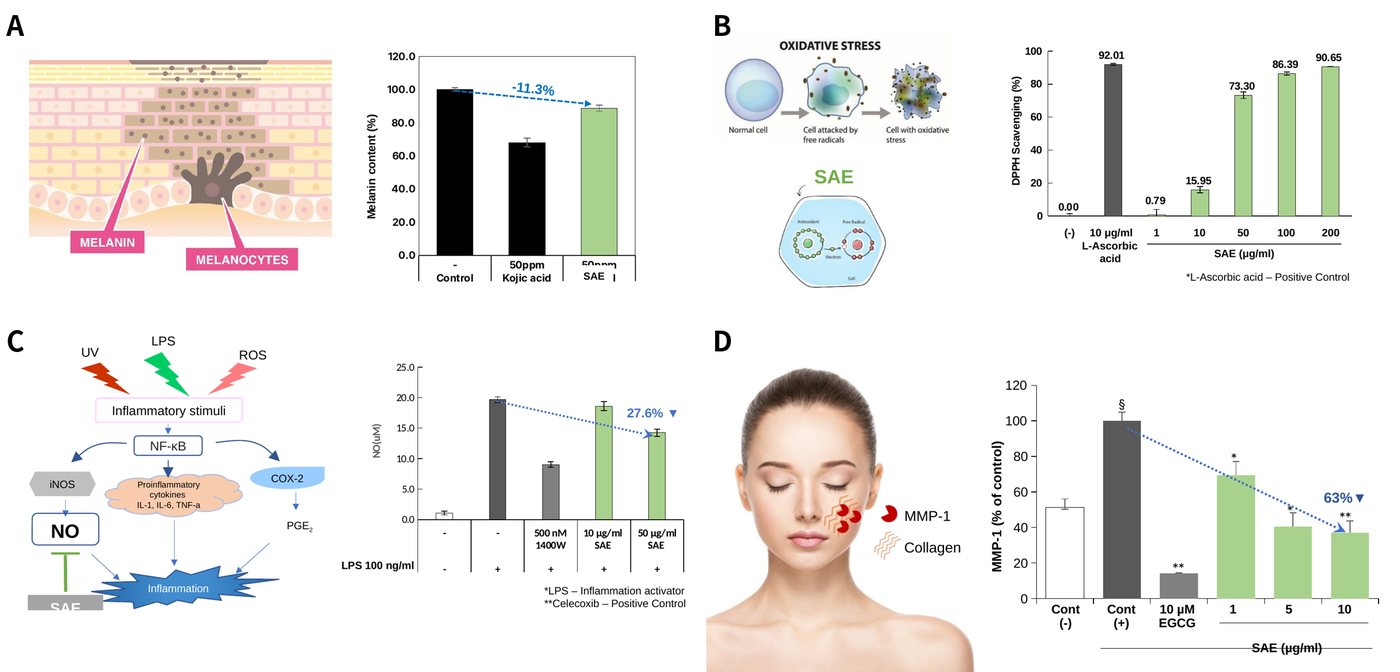
- Skin tone: Treatment of melanocytes with SAE reduced melanin content by approximately 11.3%.
- Antioxidant: In the DPPH radical scavenging assay, SAE strongly scavenged free radicals in a concentration-dependent manner.
- Soothing: Under LPS-induced inflammatory conditions, SAE reduced production of the inflammatory mediator nitric oxide (NO) by 27.6%.
- Anti-aging: SAE inhibited TNF-α-induced expression of the collagen-degrading enzyme MMP-1 by up to 63%.
Result III: 8-week double-blind split-face study
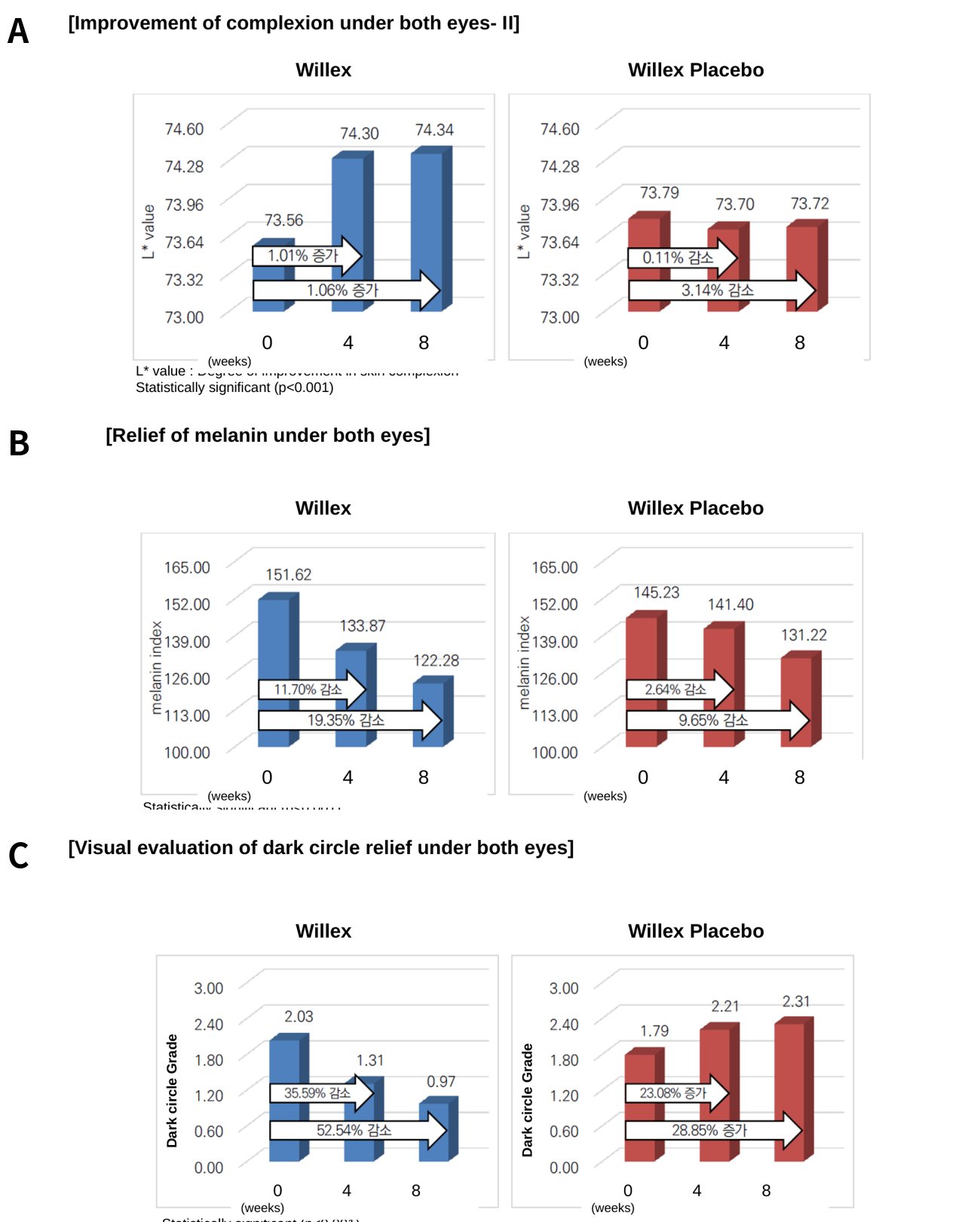
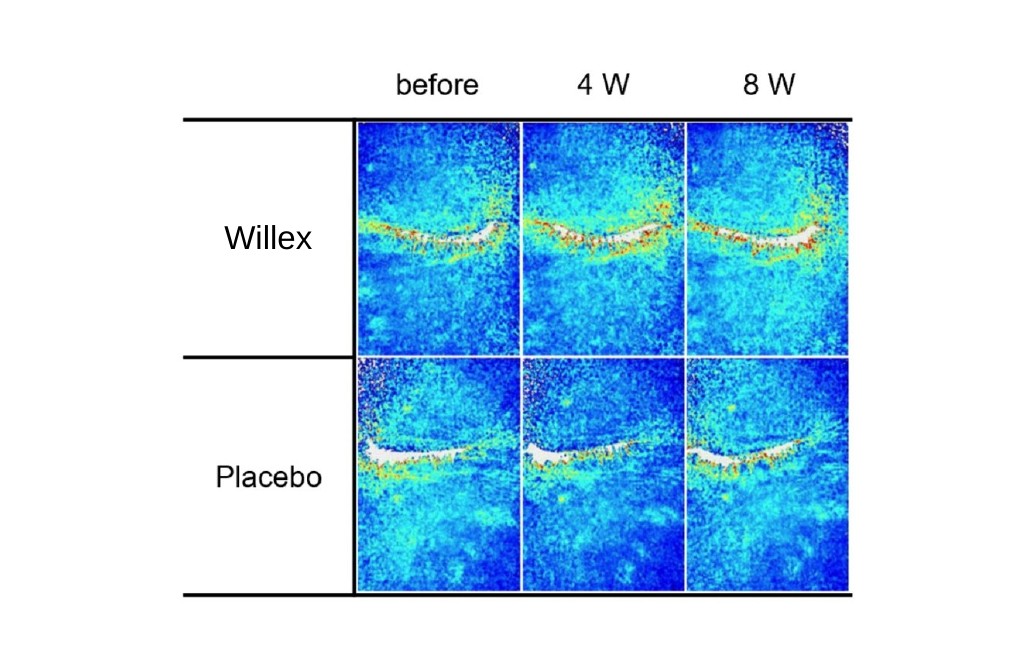
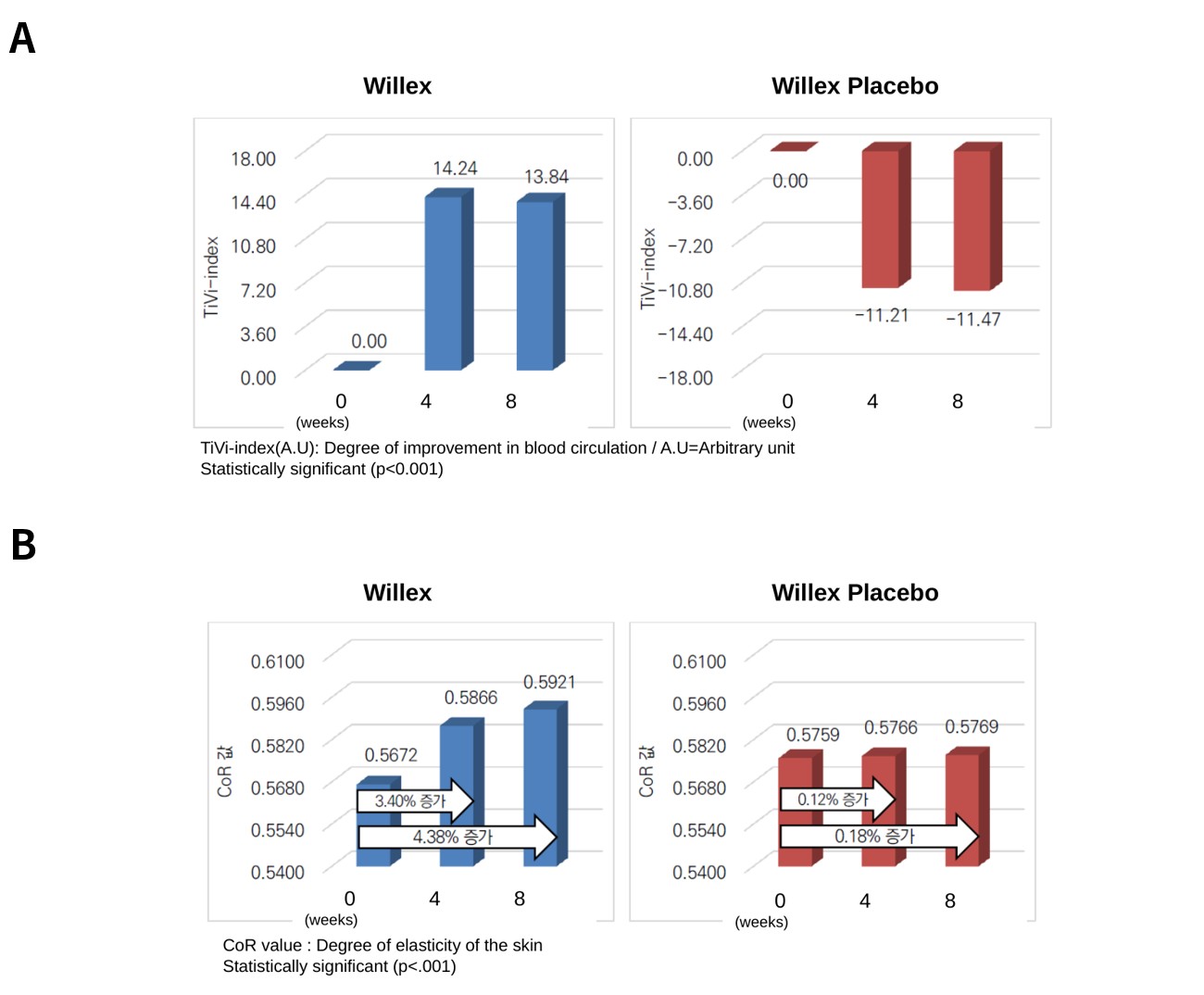
29 women aged 27–59 (mean 51.2) with vascular or pigmented dark circles applied 2% Willex to one under-eye area and placebo to the other, twice daily for 8 weeks. All differences below were statistically significant (p<0.001).
| Parameter | Method | Willex 2% | Placebo |
|---|---|---|---|
| Skin brightness (L*) | VISIA-CR image analysis | +1.06% | −0.09% |
| Melanin index | Mexameter | −19.35% | −9.65% |
| Dark circle grade (lower is better) | Expert visual assessment | −52.54% | +28.85% |
| Under-eye elasticity (CoR) | Ballistometer | +4.38% | +0.18% |
- Jeon S, Yoon S, Kim Y, Shin S, Ji H, Cho E, Park D, Jung E. The effect of Salix alba L. bark extract on dark circles in vitro and in vivo. Int J Cosmet Sci 2023;45(5):636-46. doi:10.1111/ics.12873
- BioSpectrum, Inc. Willex Technical Data Sheet.
- Korean Patent No. 10-2874784, white willow bark extract for dark circles. BioSpectrum Co., Ltd., 2025.
- Korean Patent No. 10-2962438, white willow bark extract for skin barrier and moisturizing. 2026.
- Legal Notice: Although scientific and medical terminology is used in this description, it is intended to help consumers understand the ingredient introduced and was not written to suggest that products containing this ingredient have medical or therapeutic effects. The scientific information presented is based on objective facts grounded in published papers, and the literature referenced is cited for the key content. Ingredient research data do not represent the effects of a finished product.
- Republic of Korea: Products containing this ingredient are cosmetics that use only ingredients permitted for cosmetic use and comply with the Cosmetics Act and related regulations.
- United States: Products containing this ingredient are cosmetics that use only ingredients permitted in cosmetics and comply with applicable U.S. cosmetic regulations, including the Federal Food, Drug, and Cosmetic Act (FD&C Act) and the Modernization of Cosmetics Regulation Act of 2022 (MoCRA).