
EGF (sh-Oligopeptide-1)
Epidermal growth factor is a peptide naturally present in the body. Its discovery reshaped the understanding of skin growth and aging, and earned the 1986 Nobel Prize in Physiology or Medicine.
- INCI name
- sh-Oligopeptide-1 (formerly Human Oligopeptide-1)
- Structure
- 53 amino acids, ≈ 6 kDa, 3 disulfide bonds (Cys6–Cys20, Cys14–Cys31, Cys33–Cys42)
- Production
- Recombinant, produced by microorganisms; safety-assessed as a cosmetic ingredient
- Key evidence
- Cohen S, J Biol Chem 1962;237:1555-62 / 1986 Nobel Prize
Discovery

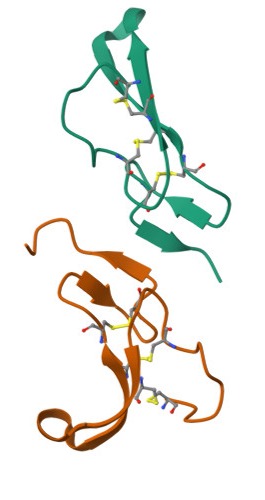
In 1962, Dr. Stanley Cohen of the United States discovered that injecting newborn mice with an extract of mouse submandibular glands caused their eyes to open early and their teeth to erupt sooner. He subsequently isolated and characterized the substance, showed that it potently stimulates the growth of cells in a variety of epithelial tissues, and named it “epidermal growth factor (EGF)” (Cohen S, J Biol Chem 1962;237:1555-62).
For this work, Dr. Cohen shared the 1986 Nobel Prize in Physiology or Medicine with Dr. Rita Levi-Montalcini. The discovery marked a major turning point in understanding skin growth, maturation, and aging, as well as the physiological changes of the skin.
How EGF works in cell biology
EGF binds the EGF receptor (EGFR) on the cell surface and activates its tyrosine kinase. In cell studies this triggers a cascade of changes, including increased intracellular calcium, glycolysis and protein synthesis, and the expression of many genes, ultimately leading to DNA synthesis and cell proliferation.
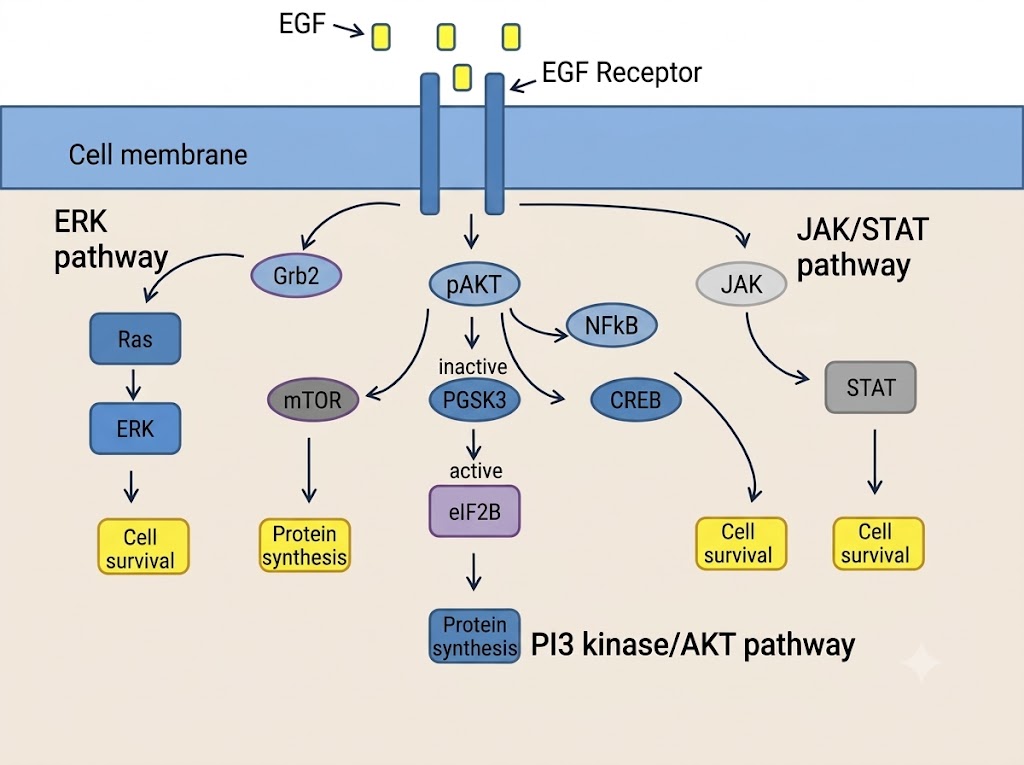
EGF is found in blood, sweat and saliva, and its levels decline with age. In cell studies it also increases the synthesis of hyaluronic acid and glycoproteins involved in hydration.
A skin-conditioning peptide
EGF was originally developed as a pharmaceutical. At the much lower levels used in skincare it serves as a skin-conditioning ingredient and is used in cosmetics in Korea, Japan and elsewhere. All commercial EGF is a recombinant protein produced in microorganisms. It is listed in the PCPC International Cosmetic Ingredient Dictionary & Handbook as sh-Oligopeptide-1.
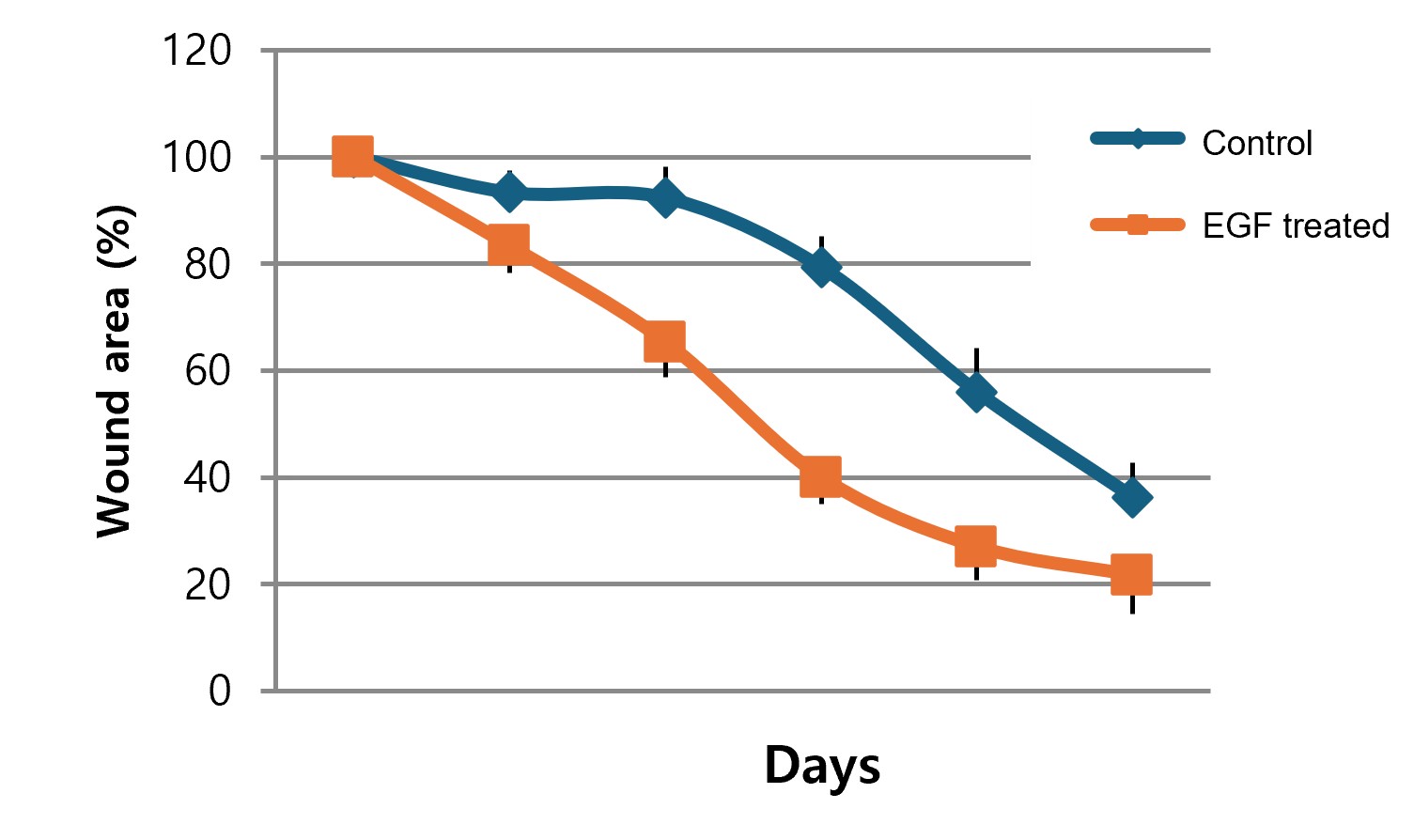
- Smoother, more supple feel: Helps skin feel smoother and more supple. As a skin-conditioning ingredient, it helps soften rough, dry areas so the skin surface feels more even and pliable.
- Hydration: Helps skin look and feel hydrated. It helps the skin hold on to moisture, leaving it with a plump, comfortable feel throughout the day.
- Fresher-looking complexion: Supports a clearer, fresher-looking complexion as part of a daily routine. With regular use, dull and tired-looking skin appears brighter and more refreshed, and it pairs well with other conditioning ingredients.
- Legal Notice: Although scientific and medical terminology is used in this description, it is intended to help consumers understand the ingredient introduced and was not written to suggest that products containing this ingredient have medical or therapeutic effects. The scientific information presented is based on objective facts grounded in published papers, and the literature referenced is cited for the key content. Ingredient research data do not represent the effects of a finished product.
- Republic of Korea: Products containing this ingredient are cosmetics that use only ingredients permitted for cosmetic use and comply with the Cosmetics Act and related regulations.
- United States: Products containing this ingredient are cosmetics that use only ingredients permitted in cosmetics and comply with applicable U.S. cosmetic regulations, including the Federal Food, Drug, and Cosmetic Act (FD&C Act) and the Modernization of Cosmetics Regulation Act of 2022 (MoCRA).