
Liposomes and skin science
Liposomes are made from natural soybean lecithin (phospholipids). They share the components and structure of skin cell membranes, which makes them skin-friendly, and they are derived from a renewable plant source.
Visible results, gentle on skin
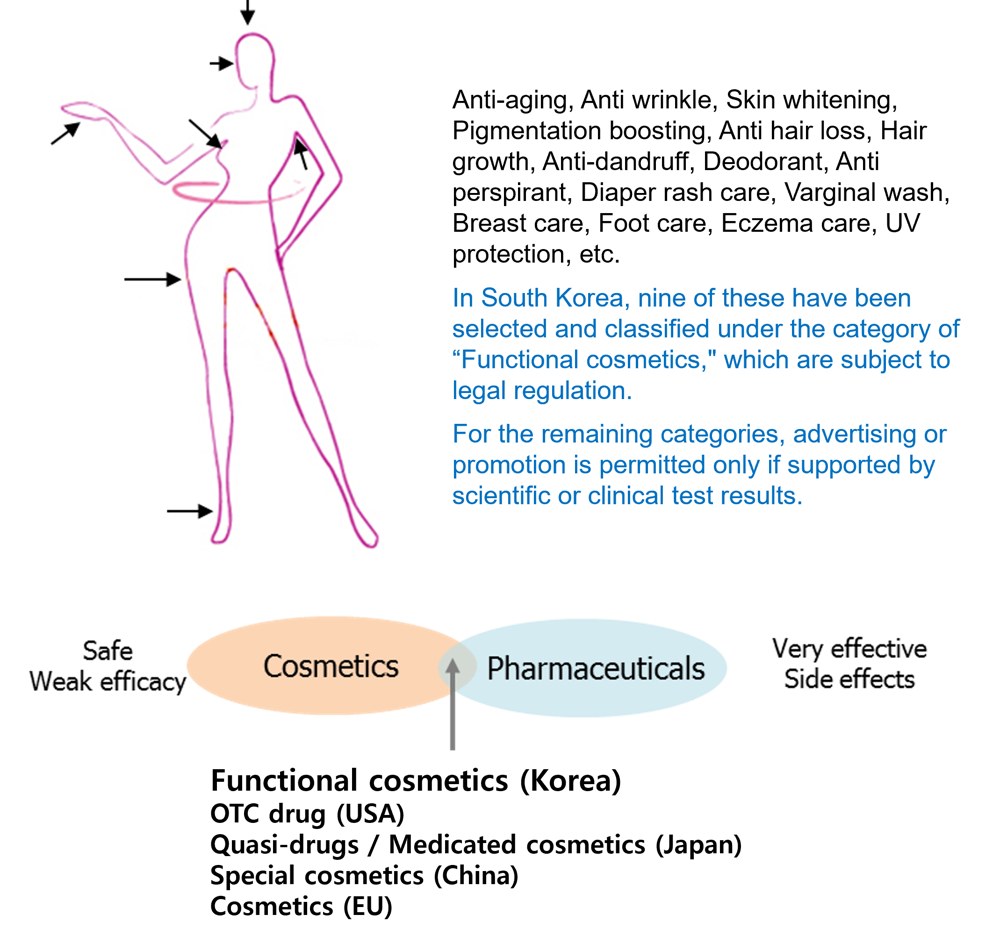
Today’s consumers expect more from cosmetics than simple moisturizing or protection; they look for visible improvements in their skin condition. At the same time, they seek gentle, safe products that can be used daily over long periods without placing a burden on the skin. Products that offer both efficacy and safety have become the new standard for 21st-century cosmetics.
In South Korea, the Cosmetics Act classifies nine categories—including products for skin brightening, wrinkle improvement, UV protection, the alleviation of hair loss symptoms, and the care of acne-prone skin—as “functional cosmetics.” These products must undergo a review or reporting process regarding their efficacy and safety before they can be sold. In Japan and the United States, products that claim functions beyond the standard definition of cosmetics are regulated as “quasi-drugs” or “OTC (over-the-counter) drugs.” China distinguishes between “special-use cosmetics” and general cosmetics. While Europe does not have a separate classification system of this kind, it mandates that any efficacy claims made by a product must be supported by scientific evidence.
Advancements in biology and chemistry are continuously introducing new ingredients designed for benefits such as wrinkle reduction and skin tone improvement. However, for any ingredient—no matter how potent—to perform its intended function within the skin, it must meet three key criteria: it must be effectively delivered into the skin, remain stable throughout the product’s use, and cause no skin irritation. Consequently, the formulation itself—which houses and delivers these active ingredients—must be gentle and skin-friendly. StemCello Revitalizing™ is formulated with all of these requirements in mind.
The stratum corneum barrier
The stratum corneum, the outermost layer of skin, keeps external substances out. It consists of corneocytes stacked like bricks, with lipids filling the spaces between them.
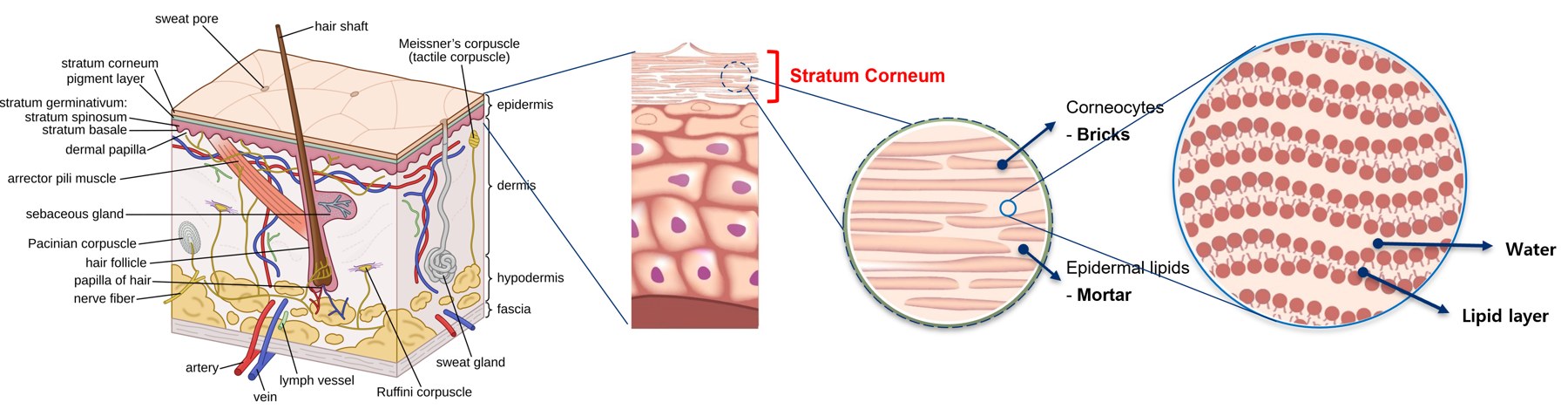
These intercellular lipids (ceramides, cholesterol and fatty acids) form multiple lamellar layers with thin water layers in between. This lipid matrix is the main route by which cosmetic ingredients enter the skin’s surface layers.
The 500-dalton rule
The stratum corneum is tightly packed. Ingredients pass most easily when their molecular weight is below about 500 Da and they are moderately soluble in both water and oil. Large molecules and purely water-soluble actives have difficulty on their own. Delivery technology loads them into skin-friendly carriers that improve their affinity for the stratum corneum.
A vesicle built like a cell membrane
The leading delivery technology in cosmetics is the liposome, first used in pharmaceuticals. A liposome is a spherical vesicle formed spontaneously in water by phospholipids, the main component of lecithin. It has a lipid bilayer like a cell membrane. Water-soluble ingredients sit in the aqueous core and oil-soluble ingredients in the bilayer, so actives with different properties travel together.
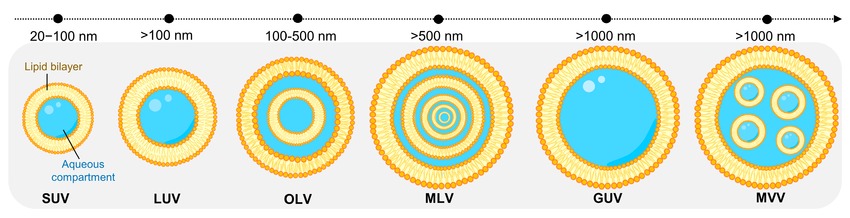
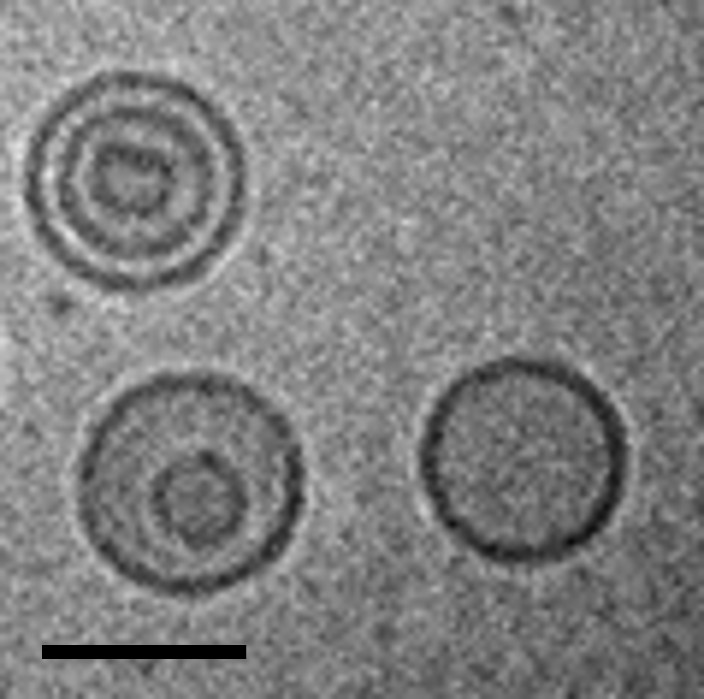
A liposome with one bilayer is unilamellar; one with several is multilamellar. Because liposomes share the composition of biological membranes, they cause little irritation. On contact with skin they fuse or exchange lipids with the stratum corneum, releasing their actives, while the phospholipids help replenish the barrier and support moisture.
| Type | Abbrev. | Typical size |
|---|---|---|
| Small unilamellar vesicle | SUV | 20–50 nm |
| Large unilamellar vesicle | LUV | > 50 nm |
| Multilamellar vesicle | MLV | 100–1,000 nm |
Size and flexibility both matter
Depending on the method and the type and purity of the lipids, liposomes range from tens of nanometers to several micrometers. Membrane flexibility matters as much as size: like a water balloon, an elastic liposome can change shape and move between the layers of the stratum corneum. Very small liposomes tend to fuse quickly at the surface, while liposomes of suitable size and flexibility have been reported to carry actives further into the stratum corneum.
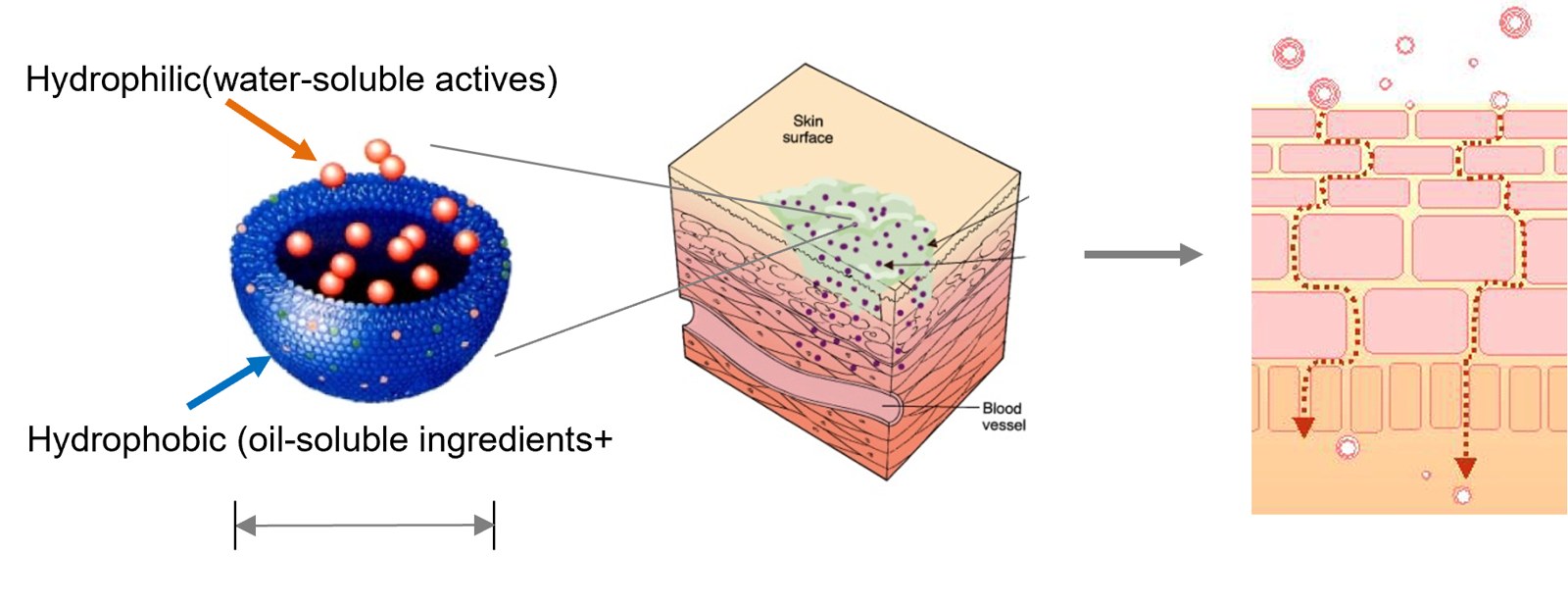
Liposomes long required high-pressure homogenizers and extensive know-how, and were harder to stabilize than ordinary emulsions, so they appeared only in some premium products. Lecithin liposomes still offer advantages other systems cannot easily replace:
- Made from naturally derived ingredients such as lecithin
- Low irritation, and help soothe the feel of irritated skin
- High skin affinity, sharing the composition and structure of biological membranes
- Effective delivery of water-soluble actives to the skin’s surface layers
- Simultaneous delivery of water- and oil-soluble ingredients